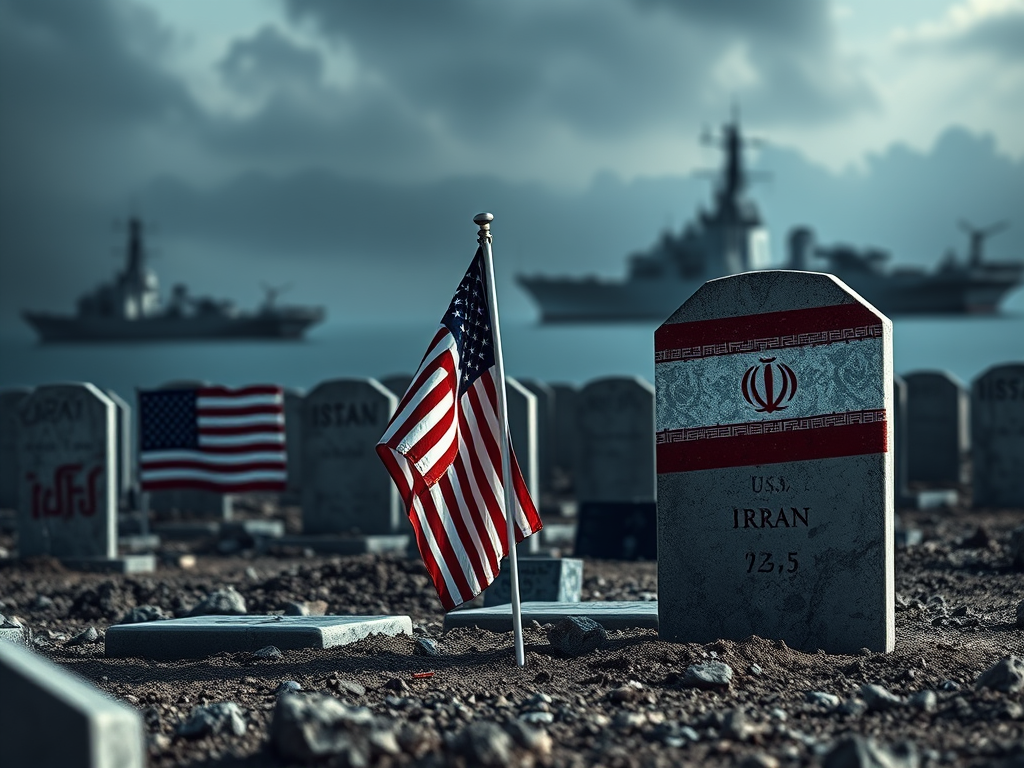
April 2, 2026
Tom Raquer
Lt. Col. (Ret.), USAF • Southeast Asia Foreign Area Officer
From the series: After the Winter — Collapse, Spring, and the New First Turning
Part II of a three-part series on time, system stress, and strategic miscalculation
PREVIEW
Some targets are valuable.
Some targets are decisive.
And some targets are designed to be struck.
Kharg Island falls into the last category.
KEY POINTS
- Not all high-value targets produce strategic advantage
- Geography can turn tactical success into strategic failure
- Kharg is exposed—but that exposure is operationally deceptive
- Striking energy infrastructure risks escalation without restoring flow
- Iran’s leverage lies in disruption, not preservation
- Misreading the system produces overreach
STRATEGIC CONTEXT
War rewards correct identification.
Not active.
Not capability.
Identification.
What matters is not what can be struck—
But what should be struck?
Kharg Island appears obvious:
- Major oil export terminal
- Concentration of infrastructure
- Visible, fixed, targetable
It invites action.
Which is precisely the problem.
THE TARGETING ERROR
High value is not the same as decisive.
Destroying Kharg would not end Iran’s ability to impose cost.
It would confirm its strategy.
Because this war is not being fought to preserve infrastructure.
It is being fought to control:
- Risk
- Flow
- Perception
Remove Kharg—
and Iran loses revenue.
But it retains its primary lever:
Disruption.
GEOGRAPHY IS THE TRAP
Kharg sits inside a constrained maritime system.
Narrow waters.
Predictable routes.
Dense traffic patterns.
Everything that moves through the Gulf must pass through a limited number of pathways.
That creates a condition where:
The environment matters more than the target.
Even if Kharg is destroyed—
The geography remains.
And the geography favours disruption.
ESCALATION WITHOUT RESOLUTION
Striking Kharg would achieve three immediate effects:
- Escalation: Iran responds across multiple domains
- Market shock: Prices spike, insurance withdraws
- Narrative shift: Conflict expands beyond containment
What it does not achieve:
- Restoration of flow
- Reduction of risk
- Strategic closure
This is the core problem:
An action that increases activity without producing a resolution
IRAN’S ACTUAL STRATEGY
Iran does not need to defend every asset.
It needs to maintain system pressure.
That pressure operates through:
- Maritime uncertainty
- Proxy distribution
- Selective escalation
This creates a condition where:
Even degraded infrastructure does not reduce leverage.
Because leverage is not tied to production.
It is tied to disruption.
THE ILLUSION OF DECISIVE STRIKE
Modern military thinking favours visible effects:
- Targets destroyed
- Facilities degraded
- Capabilities reduced
These are measurable.
But they are not always decisive.
In system-level conflict, the decisive variable is:
Function.
If the system does not resume function—
Then destruction has not produced a strategy.
It has produced activity.
OVERREACH
Overreach begins with misidentification.
If the war is understood as:
A campaign of targets—
Then striking Kharg appears logical.
If the war is understood as:
A contest of systems—
Then, striking Kharg becomes dangerous.
Because it reinforces the opponent’s model:
Sustained disruption.
Distributed pressure.
Endurance over resolution.
WHAT WOULD ACTUALLY MATTER
If the objective is strategic effect—
Then the focus is not destruction.
It is restoration.
Flow must resume.
Risk must become tolerable.
Markets must function.
Without these:
No level of tactical success produces a strategic outcome.
CONCLUSION
Kharg is not decisive.
It is illustrative.
It reveals whether the war is being understood correctly.
Strike it—
and the war expands.
Avoid it—
And the problem remains.
Because the issue is not the target.
It is the model being applied.
FOR FIRST TURNING STRATEGISTS
If the system—not the target—is decisive—
Then the question is:
Are we striking what matters—
Or what is visible?
SOURCES
U.S. Energy Information Administration (EIA) — Gulf export infrastructure
International Energy Agency (IEA) — global oil flows
Lloyd’s List — maritime risk and insurance behaviour
Institute for the Study of War — Iran conflict assessments
BIO
Tom Raquer is a retired U.S. Air Force Lieutenant Colonel and Southeast Asia Foreign Area Officer. He writes on geopolitics, energy security, and the relationship between war, strategy, and political legitimacy.

Leave a Reply The Essential American Citizen Thanks you!