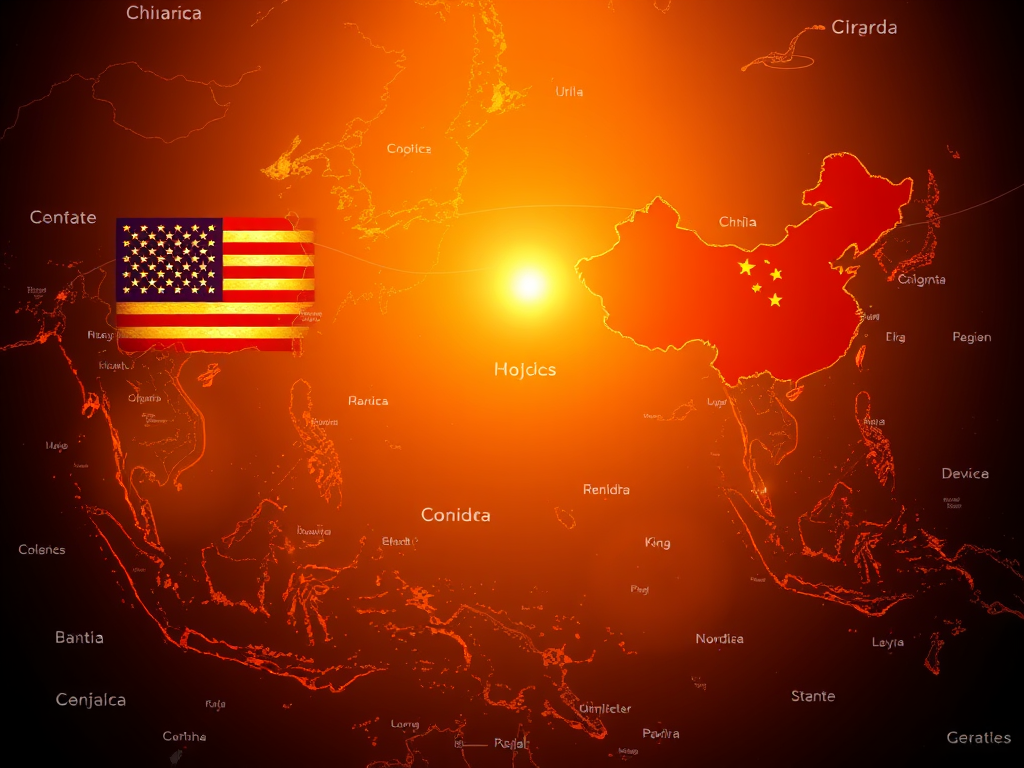
“But the safety of the people of America against dangers from foreign forces depends not only on their forbearing to give just causes for war to other nations, but also on their placing and continuing themselves in such a situation as not to invite hostility or insult; for it need not be observed, that there are pretended as well as just causes of war.” — Founder John Jay, Federalist #4.
Geopolitics Bites Back: If China’s future is one of reversal rather than ascendance, why are we inviting hostility? Why do we call it “A Pacing Threat”? Why try to contain it? Shouldn’t we seek cooperation throughout the Indo-Pacific to mitigate its destabilizing impact on the region?
This pivotal question dismantles the flawed assumptions underpinning U.S. foreign policy. China faces significant internal challenges. Its global prominence is faltering. The narrative of an unyielding, ascending threat demands urgent reassessment. The United States must not escalate tensions through a misguided containment strategy. Instead, it should pivot towards cooperative solutions. These solutions should foster regional stability and engagement throughout the Indo-Pacific.
The binary view that the Indo-Pacific is merely a battleground for U.S.-China rivalry is a dangerous oversimplification. Peter Zeihan discusses this in “The Accidental Superpower.” The structuring principles of globalization are disintegrating. This change is thrusting the world into a “Hobbesian” age of geopolitical strife. Geography and historical relationships shape national destinies (Zeihan, 2014). This profound transformation signifies an opportunity for America to redefine its role. The nation can evolve not as a confrontation-driven superpower. Instead, it can become a stabilizing force that promotes cooperation and mutual interests across the region.
Let’s face it: the U.S. has long framed China as a formidable juggernaut, a narrative that reverberates in the corridors of power in Washington. Yet, emerging insights from scholars like Michael Beckley reveal that Chinese economic growth is slowing. It even be reversing (Beckley, 2023). If we accept this hypothesis, then a coercive containment strategy becomes not just obsolete but also counterproductive. Such an approach invites instability. It alienates regional partners who otherwise seek common ground with the U.S.
The choice is clear—why not embrace cooperation? By extending diplomatic outreach and cultivating sincere partnerships with Southeast Asian nations, the U.S. can forge a coalition that promotes regional stability in the face of potential turmoil stirred by China’s challenges. This collaborative approach is not capitulation; it’s a strategic pivot that strengthens alliances while honoring the nuances of local sovereignty.
Moreover, economic partnerships must obliterate militaristic posturing. The Indo-Pacific is not merely a strategic chessboard. It is a vibrant financial ecosystem ripe with opportunities for trade and investment. The U.S. can cultivate economic interdependence that minimizes tensions by developing comprehensive trade agreements, empowering technological collaboration, and enhancing infrastructure investments. The Indo-Pacific must be infused with shared growth and community—not rivalry and mistrust.
Global challenges—climate change and public health crises—demand collective action. The U.S. must lead by example through multilateral efforts that show collaboration’s power. Working together against common threats reinforces relationships. It builds trust among nations facing the implications of a transforming world order.
### Recommendations for Policy Change
1. Reassess Strategic Priorities:
The U.S. must realign its understanding of China’s position. It needs to move past the notion of it as a singular “pacing threat.” It should also recognize its vulnerabilities. Acknowledging China’s slowing ascent will allow for crafting a more effective foreign policy.
2. Strengthen Alliances and Partnerships:
Engagement with ASEAN nations must be prioritized. This will reinforce commitments. It will also help create a strategy that emphasizes collective resilience. This approach is crucial in the face of potential challenges posed by China’s internal instability.
3. Promote Economic Diversification:
The U.S. should focus on diversifying supply chains. It should invest in strong economic partnerships. This approach will alleviate dependency on Chinese manufacturing. Thus, it will create possible other markets.
4. Foster Technological Cooperation:
Collaboration on technology and innovation can align interests. It fuels economic growth. It enables nations to collectively navigate the shifting geopolitical landscape.
5. Encourage Regional Security Dialogues:
Facilitating honest discussions on security issues among Indo-Pacific nations, including China, will help build mutual understanding. It will also alleviate tensions stemming from misinterpretations or aggressive posturing.
### Conclusion
Suppose China is entering a phase of reversal rather than sustained ascendancy. The United States has a critical opportunity to reshape its foreign policy. It should favor cooperation over confrontation. The U.S. can foster a more stable Indo-Pacific through deliberate partnerships. It should engage with regional concerns and uplift the economies of Southeast Asian nations. This is not merely a strategic choice. It is a choice for shared success, not a path leading only to hostility and conflict. With strategic foresight, adaptability, and openness, America can become a proactive leader. It should be dedicated to peace and stability in an evolving geopolitical landscape.
### References
1. Beckley, M. (2023). “The Great Rivalry: America, China, and the World.” Foreign Affairs.
2. U.S. Census Bureau. (2022). “Trade in Goods with ASEAN.”
3. Zeihan, P. (2014). “The Accidental Superpower: The Next Generation of American Preeminence and the Coming Global Disorder.”
4. OECD. (2021). “Economic Surveys: Indonesia.”
5. Vann, A. (2021). “The Nature of Regional Engagement: The U.S. and China in Southeast Asia.”
6. High, S. (2019). “American Foreign Policy and Human Rights.”
7. World Bank. (2021). “Indonesia Economic Prospects.”
8. Cruz, M. (2022). “Indonesia’s Economic Relations with China: A New Paradigm.”
Leave a Reply The Essential American Citizen Thanks you!