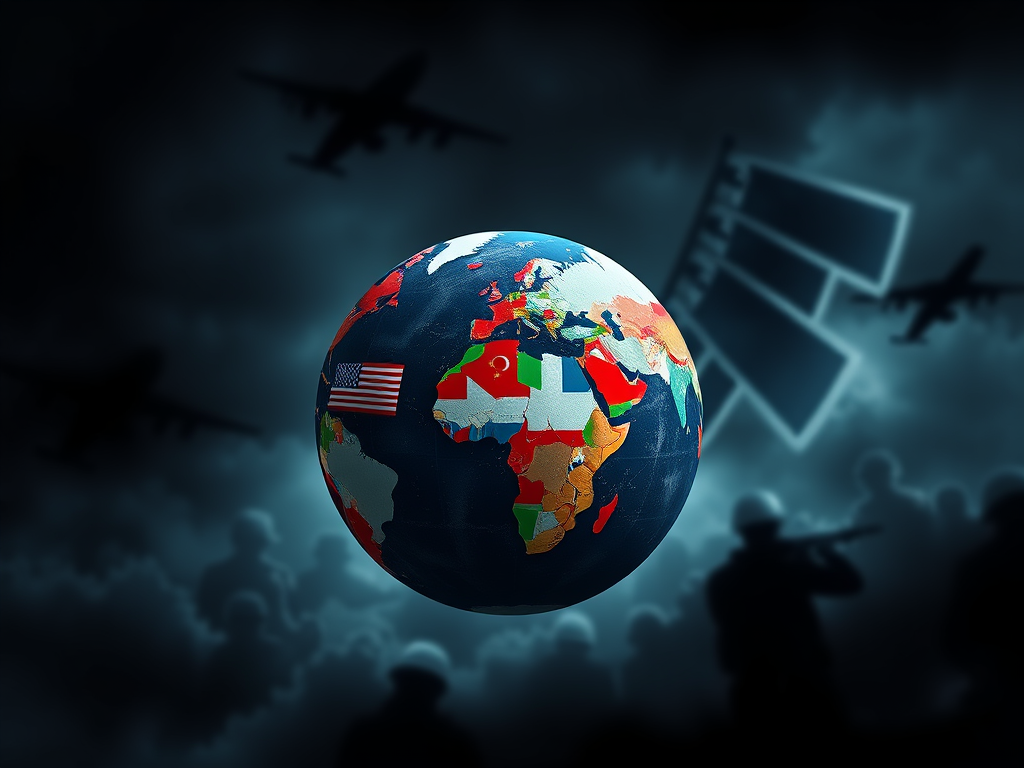
In her relentless campaign rhetoric, Kamala Harris proclaimed, “America must unburden ourselves from what is.” While much of her talk is laughable, this statement hits home. It is high time we stop our Republic from chasing the disastrous pursuit of global liberal hegemony. We need to craft new policies that put America first. In this increasingly multipolar world, power is distributed among different countries, not consolidated in America. The “unipolar moment” is long gone. We are one voice among many, and many nations refuse to bow to our designs. Liberal hegemony isn’t just naive; it’s fundamentally immoral and dangerously delusional. Our insistence on imposing our values has led to countless lives lost, resources wasted, and suffering inflicted upon the world. At every turn, we have failed spectacularly.
What Is Liberal Hegemony?
For nearly three decades, U.S. foreign policy has revolved around the misguided notion of liberal hegemony. This is the absurd belief that America should transform every nation into a liberal democracy. Neoconservative Max Boot argues that we should spread “the rule of law, property rights, and other guarantees.” He suggests the use of force is required. This arrogance is a prime example of our elites’ lack of touch.
In stark contrast, realist John J. Mearsheimer, in his book The Great Delusion, reveals a shocking truth. Since the Cold War ended, the United States has engaged in military conflict often. This has happened for two out of every three years. From 1990 to 2017, our military deployments occurred six times more often than in the earlier 200 years. The wars initiated under Clinton, Bush, and Obama have “did not achieve any significant success.” The cost? A staggering $8 trillion was wasted, with an estimated 940,000 lives lost—both civilian and combatant—and millions displaced. This does’t even include the lives lost and displaced in the ongoing Ukraine-Russia conflict.
Nationalism Over Global Aspirations
Let’s face it: nations act out of necessity, not lofty ideals. Our elites are trapped in a delusion. They are convinced that every country yearns for Western-style democracy. Meanwhile, they ignore the brutal realities on the ground. For over 30 years, U.S. policymakers have clung to this misguided belief in liberal hegemony, trying to dictate terms in a multipolar world. Spoiler alert: other countries will always prefer their interests over our misguided expectations.
Personal Experience
I served as a political-military affairs officer for the Pacific Command in Southeast Asia. I saw firsthand how our attempts to “liberalize” other nations often breed resentment instead of goodwill. I was involved in programs to promote democracy. But if those efforts had succeeded, Southeast Asian countries would have supported us in NATO expansion. They would have also supported us in the Ukraine-Russia conflict. We frame this as a fight for democracy against authoritarianism, yet they’ve chosen neutrality—an indictment of our approach.
Southeast Asia’s colonial history shapes its perspective on the Russia-Ukraine conflict. Jeffrey Reeves from the National Bureau of Asian Research points this out. Yes, there’s sympathy for Ukraine, but skepticism about Western involvement runs deep. Many Southeast Asian nations are indifferent to U.S. alliances and sympathetic to Russia’s self-defense narrative.
During a visit to Indonesia, I observed this ignorance firsthand. An admiral lectured the Indonesian navy chief on democracy. He received the blunt response: “You think you are superior to us.” That moment was a wake-up call, underscoring our utter lack of understanding of Indonesia’s rich history and governance.
The Cost of Misguided Interventions
This destructive agenda must end. Policymakers have repeatedly tried to reshape the world in their image, leading to disaster in Afghanistan, Iraq, and Libya. Our efforts to impose liberal democracy have resulted in catastrophic failures driven by ignorance of local cultures.
Take the situation in Ukraine as a prime example of this folly. We’ve been sold the narrative that Russia must adopt our values while we ignore its legitimate security concerns about NATO. This isn’t just about Ukraine; it’s about preserving a crumbling American hegemony.
The Financial Drain
Since the Russian invasion in 2022, the United States has committed an astonishing $175 billion in aid to Ukraine. Imagine if that money had been used to help Americans instead—each citizen gets about $525! Meanwhile, Europe’s reliance on Russian oil and gas complicates the situation further.
Progressives and neoconservatives have lived in a fantasy world. They believe they can create a global utopia by imposing their ideals. They do this without regard for reality. Nations are driven by identity, power, and security. The mistaken belief that we can change these core aspects has led us straight to disaster.
The Danger of Self-Delusion
Norwegian political scientist Glenn Diesen lays bare our misguided approach in The West’s Dangerous Self-Delusions: The Conflict with Russia. Instead of seeking peace through constructive competition, we frame the defeat of major powers as essential for maintaining our hegemony. This self-deception blinds us to uncomfortable truths. Russia is merely our latest failure.
Implications of Our Policies
The weak support for sanctions on Russian energy should serve as a wake-up call. Europe will ultimately seek to return to lower-cost Russian supplies.
– Energy Dependence: In 2021, 34% of the EU’s gas came from Russia, and many countries still rely on it.
– Political Hesitance: Leaders like German Chancellor Olaf Scholz have resisted calls to ban Russian energy. They recognize its importance for European security.
– Sanction Limitations: Fears of energy shortages have made the EU cautious about broad sanctions. They are focusing instead on diversifying their energy sources.
These examples illustrate how our misguided policies have created an untenable situation. The costs of this proxy war extend far beyond local ramifications, posing severe global threats. The humanitarian crisis has uprooted over 14 million Ukrainians and escalated global food insecurity, affecting around 70 million people worldwide.
The Moral Imperative to Change
Why have we recklessly accepted America’s role in trying to remake other civilizations while risking nuclear conflict with Russia? This isn’t just reckless; it’s morally reprehensible. The liberal hegemony pushed by our policymakers refuses to acknowledge the world as it truly is. Misguided interventions must end. Instead, we should adopt a pragmatic foreign policy that respects the diverse realities of today’s world.
If not for the horrendous costs in treasure and blood, we blame this on juvenile thinking among our elite. How these leaders believe they can remake countries with fundamentally different values and practices? We’ve lost in Afghanistan, Iraq, Libya, Syria, Yemen (Islamic civilization), and Russia (Orthodox civilization). Our attempts to liberalize China through near-open engagement backfired as well. Instead of a liberalized China, we now face what we term our “Pacing Threat.” It is painfully clear: our liberal hegemony advocates do not know what they are doing!
The Path Ahead
We must advocate for a realistic approach. This approach should sustain our republic’s power and prosperity. It should champion liberal principles without invasive interventions. It’s time to focus on the renationalization of America, focusing on the challenges we face at home.
In conclusion, let’s move beyond moral failures. We should embrace a future marked by respect. Our future needs pragmatism and a genuine understanding of global dynamics. It is time to reclaim our purpose. We must chart a responsible future for America. This future should value collaboration over coercion. It must also recognize the strength of diversity.
We can reshape our foreign policy together. It will show our national interests and values. We must respect the autonomy of other nations. The future of our republic depends on our ability to learn from the past. We must approach the world with the humility and respect it deserves.
We are just one voice in a burgeoning multipolar world. No one is compelled to be subservient to American designs. We must rebuild America as a multipolar nation. It should be rooted in our vital interests and values. We need to learn to coexist with those we disagree with.
Leave a Reply The Essential American Citizen Thanks you!