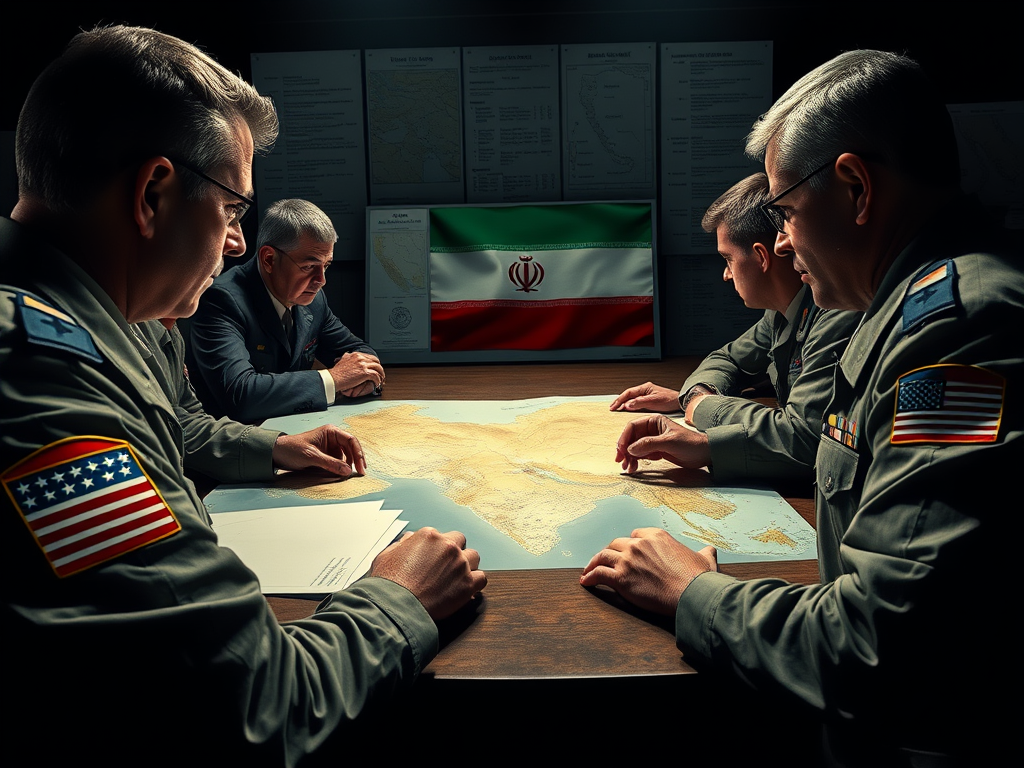
Crumbling Assumptions and the Return of Geography
Tom Raquer
Lt. Col. (Ret.), USAF | Southeast Asia Foreign Area Officer
Writer on strategy, geopolitics, and the Fourth Turning.
Author of the series After the Winter — Collapse, Spring, and the New First Turning.
From the series:
After the Winter — Collapse, Spring, and the New First Turning
Published: March 13, 2026
Preview
For nearly eighty years, the international system operated under an unusual historical condition.
Geopolitics appeared to recede.
Energy flowed freely across oceans. Trade expanded across continents. Supply chains stretched across the planet.
Many came to believe this was the natural state of the modern world.
It was not.
It was the product of a specific geopolitical order sustained by American power.
Today, many of the assumptions built upon that order are beginning to crumble.
As they do, a much older reality returns.
Nations once again live according to the strengths and weaknesses of their geography.
The Temporary Suspension of Geopolitics
History teaches that nations normally live according to the strengths and weaknesses of their geography.
Access to energy, navigable rivers, warm-water ports, and defensible terrain have always shaped the fate of states.
Before the Second World War, these realities defined international politics. Great powers competed for territory, resources, and control of strategic trade routes.
The international system was fundamentally geopolitical.
After 1945, something unusual occurred.
The United States used its naval power to secure global sea lanes and guarantee freedom of navigation. Energy moved freely from the Persian Gulf to Europe and Asia. Trade crossed oceans with unprecedented safety.
The result was a historically unusual system of global economic integration.
Globalization did not remove geopolitics.
It temporarily suspended it.
The Strategic Foundations of Globalization
This system rested on several strategic pillars.
First, the United States guaranteed maritime security across the world’s oceans.
Second, global energy markets are integrated through the uninterrupted movement of oil and natural gas.
Third, international institutions reinforced open trade.
Under these conditions, geography appeared to matter less. Manufacturing moved wherever labour was cheapest. Energy travelled thousands of miles. Supply chains stretched across continents.
Yet the network was never self-sustaining.
As geopolitical analyst Peter Zeihan has argued, globalisation largely functioned because the United States guaranteed maritime security.
Without that security, global trade integration would have been far more difficult to sustain.
The era of globalisation also revived an older strategic debate.
The British writer Norman Angell believed economic interdependence had made major war irrational.
Yet the American naval strategist Alfred Thayer Mahan argued that control of sea lanes remained the foundation of global commerce.
The past seventy years suggest that Mahan’s insight proved more durable.
The Return of Strategic Friction
Recent events in the Persian Gulf illustrate how fragile this system may be.
Attacks on energy infrastructure and disruptions to tanker traffic in the Strait of Hormuz have shaken global energy markets.
The effects ripple rapidly through the world economy.
Energy prices rise. Shipping slows. Production halts.
The disruption of energy flows through this chokepoint is not simply a temporary market shock.
It is a warning.
For decades, analysts assumed that maritime trade routes would stay secure. They also believed that energy corridors would stay safe. Analysts thought that global supply chains would function with minimal interruption.
These assumptions shaped forecasts of the international economy. This includes the widely repeated belief that the Indo-Pacific will inevitably become the centre of global economic power.
Yet those forecasts depend on geopolitical conditions that not endure.
If critical chokepoints become unstable, the economic geography created by globalisation can change rapidly.
Strategic Implications
These assumptions also shape American defence policy.
For several decades, U.S. strategic planning has increasingly focused on the Indo-Pacific as the central theatre of global power competition.
This assumption underlies force posture decisions, alliance structures, and the designation of China as the primary pacing threat.
Yet if the geopolitical conditions that sustained globalisation weaken, some of these assumptions prove less certain.
The durability of alliances depend far more on structural changes in the international system. This includes Japan’s long-standing partnership with the United States. It depends more on these changes than on the simple continuation of current trends.
Strategic planning based on linear projections may therefore face unexpected challenges if the underlying system is changing.
Geography Reasserts Itself
As globalisation weakens, geography returns to the forefront of international politics.
Energy resources stay unevenly distributed. Transport corridors remain vulnerable. Industrial capacity remains concentrated in particular regions.
More than a century ago, the British geographer Halford Mackinder warned that geography remains the enduring framework of global power.
Technologies and economic systems may temporarily soften its constraints, but they cannot erase them.
Globalisation did not abolish geopolitics; it merely postponed its consequences.
The Fourth Turning Context
Periods of systemic crisis often reveal underlying structures that had earlier been obscured.
Strauss and Howe describe Fourth Turnings as moments when institutions weaken, and established orders start to fracture.
Political consensus erodes. International systems lose stability.
The globalisation order that defined the post–Cold War era may now be entering such a phase.
Energy shocks, geopolitical competition, and strategic fragmentation suggest that the conditions that sustained globalisation may be changing.
For First Turning Strategists
Moments of crisis reveal underlying truths.
The era of globalisation encouraged the belief that geography had been permanently transcended.
Events now suggest otherwise.
Energy corridors stay vulnerable. Trade routes stay strategic. Nations continue to compete for security, resources, and influence.
The suspension of geopolitics is ending.
A more traditional geopolitical world may be returning.
If the order that sustained globalisation is beginning to fracture, the strategic question becomes unavoidable:
What principles should guide the strategy of a constitutional republic in such a world?
That question is the topic of the next essay in this series.
Sources
Leave a Reply The Essential American Citizen Thanks you!