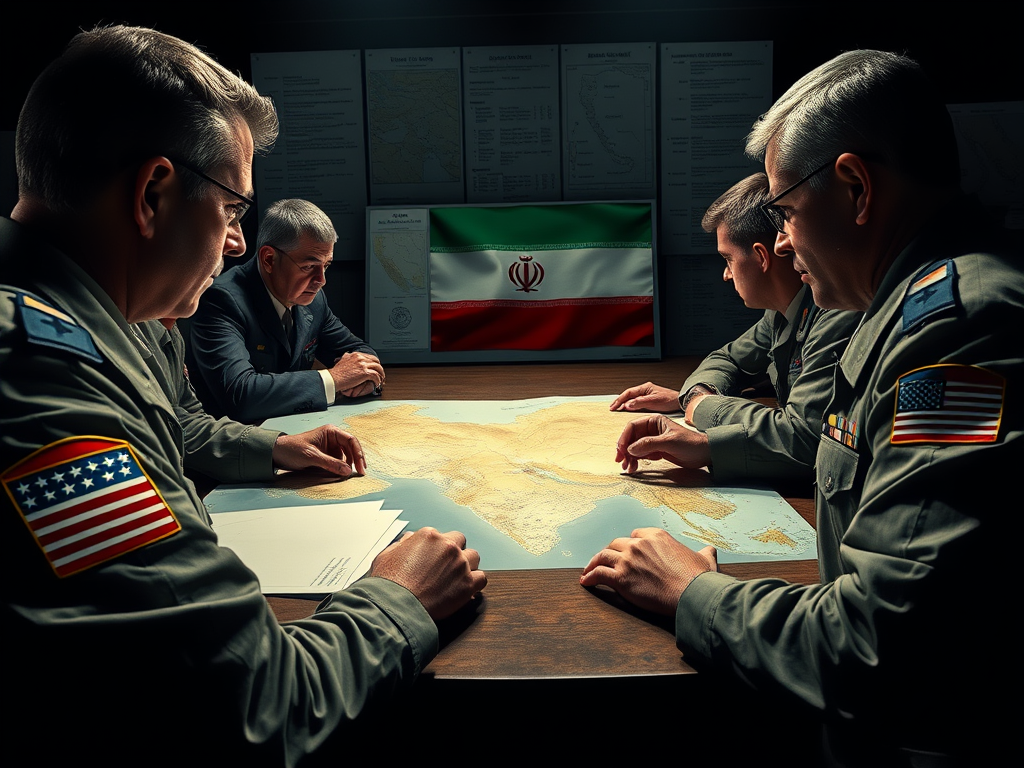
Hormuz and the Return of Classical Geopolitics
Tom Raquer
Lt. Col. (Ret.), USAF • Southeast Asia Foreign Area Officer (FAO)
Strategic analysis of geopolitics, civilizational dynamics, and the preservation of the American constitutional republic during periods of systemic crisis.
From the series:
After the Winter — Collapse, Spring, and the New First Turning
Published: March 12, 2026
Strategist’s Note
This essay is part of the series After the Winter — Collapse, Spring, and the New First Turning. The series examines how systemic crises reshape strategy. It also explores legitimacy and the structure of the international order.
Preview
The Strait of Hormuz is not simply a maritime chokepoint.
It is a structural node in the global system.
Nearly one-fifth of the world’s traded oil moves through the narrow corridor linking the Persian Gulf to the global economy.
If that flow is disrupted for a prolonged period, the consequences extend far beyond energy markets.
Supply chains tighten.
Inflation rises.
Governments face domestic political pressure.
Under such conditions, the key strategic question is not simply whether the strait can be reopened.
The deeper question is whether the international order built after the Cold War can withstand sustained structural stress.
The Strategic Importance of Hormuz
Roughly one-fifth of globally traded oil passes through the Strait of Hormuz. This is the narrow maritime corridor linking the Persian Gulf to the Arabian Sea.
That energy flow sustains major industrial economies in Europe and Asia. A prolonged disruption would ripple across the global economy almost instantly.
Oil prices rise.
Supply chains tighten.
Inflation accelerates.
But the strategic significance of Hormuz lies deeper than market volatility.
Energy flows are structural components of the global system. When disrupted, the effects extend into alliance politics, domestic stability, and state legitimacy.
The historian Fernand Braudel emphasised that long-term structural forces—trade networks, geography, and economic systems—shape political outcomes.
Hormuz sits precisely at that structural level.
The Logic of Attrition
Strategic analysis begins with political objectives.
For Iran, a decisive battlefield victory against the United States is unlikely. The balance of military power makes that clear.
But weaker powers rarely fight symmetrical wars against stronger ones.
Instead, they pursue attritional strategies.
General Võ Nguyên Giáp articulated this principle during the Vietnam War. The weaker side does not need to defeat the stronger side militarily. It only needs to prolong the conflict until the stronger power’s political will weakens.
Attrition thus operates across several domains:
• economic pressure
• alliance friction
• domestic political strain
The strategy pursued by Giáp did not aim to destroy American forces in the field. Its goal was to erode the political legitimacy of the war within the United States itself.
Energy disruption, thus, becomes a strategic instrument.
Its purpose is not tactical victory.
Its purpose is to raise the long-term political and economic cost of conflict.
The Centre of Gravity in a Republic
The Prussian strategist Carl von Clausewitz described the centre of gravity as the source of power that sustains an opponent.
In authoritarian systems, this centre often lies in the regime.
In empires, it lies in military ability.
In a constitutional republic, nonetheless, the centre of gravity is different.
It lies in political legitimacy among the citizenry.
Strategic Principle
In a constitutional republic, the ultimate centre of gravity is the political legitimacy of the government among its citizens.
The location of the centre of gravity depends on the structure of the political system. In authoritarian states, it often lies in the regime itself. In a constitutional republic, it ultimately lies in the political cohesion and consent of the citizenry.
Military ability ultimately depends on that consent.
If economic strain erodes it, the strategic foundation of a war weakens regardless of battlefield outcomes.
Energy shocks, thus, translate quickly into political pressure.
Higher fuel costs.
Economic disruption.
Public scrutiny of foreign commitments.
Under those conditions, the strategic environment changes.
The Return of Classical Geopolitics
The post–Cold War era encouraged the belief that globalization would gradually replace geopolitical rivalry with expanding cooperation.
Integrated supply chains, international institutions, and global markets appeared to bind states together.
That assumption prove historically temporary.
For most of history, cooperation between states has rested not on permanent integration but on converging interests.
When interests align, cooperation expands.
When interests diverge, competition returns.
Energy scarcity accelerates that transition.
States facing economic pressure prioritise domestic stability. Governments pursue bilateral arrangements to secure resources even when those arrangements bypass existing alliances.
Cooperation does not disappear.
But it becomes narrower, conditional, and transactional.
This mechanism begins to resemble the classical geopolitical environment: shifting alignments, strategic competition, and cooperation based primarily on asymmetric interests.
Strategic Indicators of Systemic Stress
Strategists must distinguish between temporary disruption and structural change.
Three indicators suggest that the broader international system is under stress.
Energy Nationalism
Governments restrict exports or redirect supply toward domestic markets.
Energy nationalism is often the first political response to scarcity.
Alliance Fragmentation
Allied governments pursue independent arrangements to secure energy access.
Alliance cohesion weakens when national survival becomes the primary political concern.
Domestic Political Pressure in the United States
For a republic, citizen legitimacy remains decisive.
Economic strain increases scrutiny of foreign commitments.
As Clausewitz observed, war ultimately depends on the political will of the society conducting it.
When that weakens, strategic options narrow.
The Strait That Tests an Order
Hormuz may become such a moment. This is not because of the narrow passage itself. It is because of the global system that depends on it.
A prolonged disruption of energy flows through Hormuz would test several structural pillars of the international system:
• the resilience of global energy markets
• the cohesion of alliance networks
• the durability of globalisation
• the political legitimacy of democratic governments under economic stress
The significance of Hormuz, thus, lies not only in energy flows. These disruptions also generate political pressures within democratic societies.
Systemic crises often reveal realities that stay hidden during periods of stability.
As Fernand Braudel observed, the deepest forces shaping historical outcomes are often structural rather than immediate events.
A disruption in Hormuz would thus represent more than a regional crisis.
It would represent a structural test of the international system itself.
Strategist’s Question
If the Strait of Hormuz remains closed for an extended period, it will impose sustained pressure on the global economy. The key question is not whether the United States can reopen the strait.
The deeper question is whether the post–Cold War international order can endure prolonged structural stress.
Which indicator would first if the framework begins to fracture?
Strategists and readers are invited to share their analysis.
Sources and Strategic Reading
• Carl von Clausewitz, On War
• Fernand Braudel, The Mediterranean and the Mediterranean World in the Age of Philip II
• Võ Nguyên Giáp, writings on protracted war
• William Strauss and Neil Howe, The Fourth Turning
Series Note
After the Winter — Collapse, Spring, and the New First Turning examines systemic crises. These crises reshape strategy. They also impact legitimacy and the international order’s structure.
Tom Raquer
Lt. Col. (Ret.), USAF
Southeast Asia Foreign Area Officer (FAO)
Leave a Reply The Essential American Citizen Thanks you!